Hearts - Card Game Classic
- 4.5
- Rating
- 1.00M
- Installs
- Free
- Price
 Analysis by App-foxy
I enjoy card games most when they are easy to start but still reward careful decisions. That is the space where Hearts - Card Game Classic makes sense. It is a free card game from FIOGONIA LIMITED, built around the familiar Hearts format and designed for both online and offline play. I found it most appealing as a quiet, repeatable game for short breaks rather than as a flashy, content-heavy mobile experience.
The important question is not whether Hearts is a good card game in general. It is whether this particular version suits the way you want to play. If you want a recognizable ruleset, quick rounds, and the option to play without a connection, it deserves a place on your shortlist. If you are looking for a large collection of card modes, deep customization, or a highly social competitive platform, you may be happier with another type of card app.
What I consider before choosing a Hearts app
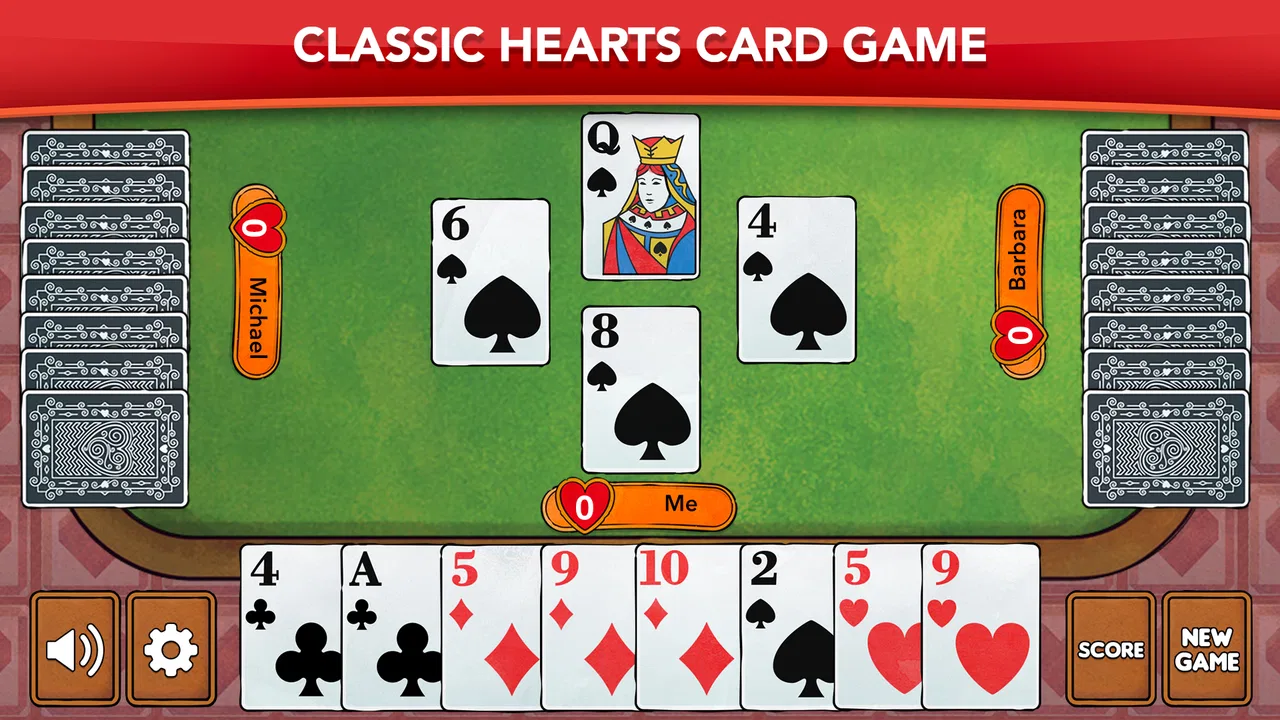
My first test with a classic card game is how quickly I can get into a round. Hearts works well here because the objective is understandable even when the decisions are not. You try to avoid taking unwanted penalty cards, while the passing phase and the changing shape of each trick force you to think ahead. A good mobile version should keep that rhythm clear instead of burying the game under menus.
You May Also Like

 Blood Strike: 2.5 Anniversary
Blood Strike’s Loadouts Turn Every Drop Into a Tactical Gamble
A close look at Blood Strike’s custom loadouts: how fast access to signature weapons reshapes its battle royale rhythm, rewards preparation, and narrows the gap between fights.

 Pandora - Music & Podcasts
Pandora’s Music Is Easy to Start, but Harder to Recover
Pandora’s strength is its low-effort path from a seed to a station. Its weak spot is how much confidence it asks you to place in connection, setup, and quiet recovery.

 8 Ball Pool
 Is Built on Rivalries, Rematches, and Routine
A close look at the rivalries, rematches, shared routines, and unanswered safety questions that turn a quick pool match into a persistent mobile community.

 Samsung Music
’s Quiet Strength Is Playing What You Already Own
Its reach comes less from spectacle than from dependable access to a personal library. That simplicity is both the app’s strongest retention engine and its ceiling.

 AccuWeather: Weather Radar
AccuWeather Review: A Quick, Clear Forecast for Everyday Decisions
For everyday plans, the best forecast is the one you can understand quickly. AccuWeather makes rain timing, radar, and local conditions easy to act on, with a few trade-offs.

 Hill Climb Racing
Why Hill Climb Racing Still Turns Crashes Into One More Run
A tiny car, a bumpy hill and one more upgrade: Hill Climb Racing keeps resurfacing because its simple chaos makes every near-miss feel personal.
More From Our News Desk



Offline access is another major factor for me. A game like this is especially useful on a commute, in a waiting room, or during a few minutes when I do not want to spend time finding an opponent. The ability to play online as well gives it more flexibility, but the offline option is the feature that makes this kind of app genuinely practical in everyday use.
I also look at the app’s age and device reach. This release arrived on October 4, 2018, and the current version is 2.3.1. It supports Android 7.0 and later, which makes it relevant to people using older phones as well as newer devices. The content rating is Everyone, so it is an approachable choice for family use, provided everyone already understands the local rules they prefer to follow.
Finally, I want to know whether the free entry point feels usable. This game is free to install, while optional in-app purchases range from $0.99 to $29.99 per item. That does not automatically make the experience unsuitable, but it is worth keeping in mind if you prefer games that never place purchase prompts in your routine. For me, the right decision depends on whether the basic card experience remains the main reason to open it.
The first rounds: familiar rules, meaningful choices
Hearts is easy to recognize, but it is not mindless. In the opening part of a round, I am already thinking about which cards I want to pass and which dangerous cards I would rather keep hidden in my hand. Passing is not simply about removing high cards. Sometimes a seemingly awkward low card is useful because it helps me avoid taking a later trick, while a strong card can become a liability when the suit returns.
That makes this game better for thoughtful breaks than for completely passive play. I can play a hand while relaxing, but I still need to watch what has been played and adjust my plan. If I am trying to avoid hearts, I must notice when opponents may be running out of a suit. If I am attempting to collect penalty cards deliberately, I need to judge whether the table is safe enough for that gamble.
One practical tip is to treat the first few tricks as information gathering rather than as a race to win. I pay attention to which suits disappear from each player’s hand and avoid assuming that a high card is automatically bad. This habit makes the computer opponents feel less predictable, even when the round itself is short. It also helps new players understand why a move that looks strange can be strategically correct.
Why the offline option changes the way I use it
The offline mode is not just a backup for a failed connection. It changes the role of the game on my phone. I can open it when I have no signal, play one round, and close it without setting up a match with another person. That makes it a better fit for small gaps in the day than a card app that depends entirely on a live community.
A realistic example is a delayed train. I may have enough time for a complete round but not enough certainty to start a multiplayer session. With this game, I can begin immediately and stop when I reach my destination. The same applies to flights, travel through weak-signal areas, or evenings when I want something structured but not demanding.
There is a trade-off, of course. Offline play cannot provide the unpredictability or social pressure of a real opponent. Computer-controlled players may suit practice and casual play, but people who enjoy reading human behavior will eventually want a live table. I see the offline mode as a strong convenience, not a complete replacement for playing with friends.
Online play and the question of social energy
The online option gives the game a different mood. A live table can make every decision feel more important, especially when another player notices a risky pass or an unusual lead. For some people, this is the main attraction of a classic card game: the rules stay simple while the personalities around the table create variety.
I would choose online play when I want a more focused session and offline play when I want control over my time. That distinction is useful because it prevents disappointment. Someone expecting a constantly active social hub may find a traditional Hearts app too restrained, while someone who dislikes waiting for opponents will appreciate being able to switch to a self-contained round.
My advice is to judge the game by the kind of interaction you actually want. If your priority is reliable access and familiar play, online support is a bonus. If your priority is conversation, rematches with friends, and the feeling of sitting at a shared table, look closely at alternatives designed primarily around private rooms or community play. I would not select this game solely because it includes an online option; I would select it because online and offline play cover different situations.
Small decisions that make the game more rewarding
The best way to improve is not to chase every trick. I have had better results by planning around suit control. Before playing a high card, I ask whether I am likely to remain in that suit later. If I can safely lose a suit early, I may gain more freedom when a dangerous card appears. This is particularly helpful for players who know the basic rules but still feel that rounds are decided randomly.
Another useful approach is to remember the direction of the passing cycle. When cards are passed, I do not only consider what I am giving away. I also consider what kind of hand another player may have received from me and how that could affect the next tricks. This adds a layer of deduction without requiring complicated controls or a long tutorial.
I also recommend resisting the urge to protect every high card. Keeping a strong card can be sensible, but it can also leave me trapped with the lead when I would rather follow. Sometimes the safest hand is not the one with the lowest visible risk; it is the one that gives me more ways to avoid controlling the next trick.
These are not hidden modes or technical features. They are ways to get more value from the specific structure of Hearts. The app works best when I use it as a compact thinking game rather than as background animation. A player who treats every round as pure luck may miss much of what keeps it replayable.
How it compares with other card-game choices
Compared with solitaire, this game offers more interaction between hands. Solitaire is often better when I want a completely private puzzle with no opponents influencing the result. Hearts is the better choice when I want to track several players, adapt to changing suits, and make decisions based on what others may be holding.
Compared with trick-taking games that use bidding, Hearts is less intimidating. I do not need to learn contracts or communicate a planned target before the hand develops. That makes it easier to recommend to someone who wants strategy but does not want a long rules lesson. The cost is that players who enjoy bidding systems and formal partnerships may find Hearts less varied.
Compared with a broad card-game collection, this app is more focused. A collection can offer variety when I am tired of one ruleset, while this version is more suitable for building familiarity with one game and improving through repetition. I would choose the collection for family gatherings where everyone wants a different activity. I would choose this game for a personal routine built around quick Hearts rounds.
There is also a difference between this kind of app and a purely multiplayer platform. A multiplayer-first alternative may be preferable if friends are the reason you play. This one makes more sense if you want to play alone sometimes and still have an online route available. That balance is its clearest practical advantage.
Where the experience may create friction
The focused design can become a limitation. If I have played several rounds in one sitting, I may want a change of pace, and a dedicated Hearts game cannot provide the variety of a larger card suite. This is not a flaw in the rules; it is a question of scope. People who need constant novelty should not expect one classic format to satisfy them indefinitely.
The free model also deserves a realistic look. Optional purchases are part of the app’s structure, so anyone who wants a completely interruption-free experience should pay attention to how the interface presents them. I do not consider the presence of purchases a reason to reject the game automatically, but I do think it matters for parents, minimalist phone users, and anyone who prefers a one-time purchase model.
Another limitation is emotional rather than technical: offline opponents cannot reproduce the table talk, hesitation, and surprise of real people. If your enjoyment comes from bluffing socially or reacting to a friend’s habits, an online room with people you know may be a better fit. I would not switch to this app expecting it to recreate a physical card night in full.
There is also a learning curve hidden inside the simplicity. The rules are approachable, but good play depends on remembering suits, anticipating voids, and accepting that a winning trick can be harmful. A newcomer may need several rounds before the decisions feel meaningful. That is normal for Hearts, yet it means the app is not ideal if you want instant rewards with almost no concentration.
Who should make the switch
I would recommend it to someone who already likes classic card games and wants a dependable Hearts option on a compatible Android phone. It is especially suitable for solo players who value offline access, travelers who need a game that does not rely on a stable connection, and casual players who want rounds that can fit into an ordinary day.
It also works well as a learning tool. A beginner can use offline rounds to understand passing, suit following, and penalty avoidance without feeling embarrassed at a live table. A more experienced player can use the same setting to practice safer leads or test a different passing approach. The key is to treat each round as a small decision exercise rather than simply tapping the suggested move.
I would be more cautious about recommending it to someone who wants a large variety of games, a strong friend-group focus, or a highly competitive environment. In those cases, a broader card collection or a multiplayer-centered alternative may justify the switch better. Likewise, if your device runs an Android version earlier than 7.0, this particular option will not match your setup.
What switching actually costs
Moving from another Hearts app should be easy in terms of rules because the core game remains familiar. The real adjustment is in your expectations. You may be leaving behind a different interface, a preferred opponent behavior, or a stronger emphasis on social play. Before switching, I would decide whether your current frustration is about the Hearts format itself or about the way your existing app presents it.
The low financial entry point makes experimentation straightforward, but the optional purchase range means I would avoid buying anything immediately. I would first play enough rounds to see whether the offline routine, online option, and overall presentation fit my habits. If I only open the game occasionally, the free version may be all I need. If I use it frequently, I would still judge purchases by whether they solve a real annoyance rather than by impulse.
There is also a small mental cost to changing apps: your familiar shortcuts disappear. I may need time to learn where the next-round controls are, how the table communicates information, and which play style the opponents encourage. That is a minor issue, but it is why I recommend testing a new card game during a relaxed session rather than during a trip when I need something instantly dependable.
My recommendation after regular play
For me, Hearts - Card Game Classic is a sensible choice when the goal is straightforward: play traditional Hearts, either alone or online, without needing a large game ecosystem. Its strongest quality is flexibility of use. I can make it a short offline distraction, a practice table, or a more focused online session depending on my situation.
The game has also reached a substantial audience, with an average rating of 4.5 from around 18 thousand ratings and more than a million installs. Those figures do not guarantee that every player will enjoy the same experience, but they do indicate that the format has found a broad audience. I would still base the decision on play style rather than popularity alone.
My clearest tip is to give it a fair trial through several complete rounds, including at least one session without an internet connection. That reveals more than the first hand: you will learn whether the pacing suits you, whether the computer play feels comfortable, and whether the focused Hearts format is enough. I would also think about the purchase model before spending, especially if you are choosing it for a child or for a phone with limited distractions.
In the end, I recommend it to players who want a familiar card game with practical offline access and enough strategic depth to remain interesting. I would skip it in favor of a broader or more social alternative if variety and human interaction are your main priorities. For everyone in between, it is a useful, low-commitment way to keep Hearts ready whenever a few quiet minutes appear.
FAQs for Hearts - Card Game Classic
01What platforms is Hearts - Card Game Classic available on?
Hearts - Card Game Classic is available for both Android and iOS platforms. You can download it from the Google Play Store or the Apple App Store. The game is designed to be compatible with most devices, ensuring a smooth gaming experience across different smartphones and tablets.
02Is there a multiplayer mode in Hearts - Card Game Classic?
Yes, Hearts - Card Game Classic offers a multiplayer mode where you can play with friends or connect with other players online. The game also features a single-player mode with AI opponents if you prefer to play solo. This flexibility makes it easy to enjoy the game in various social settings.
03Does Hearts - Card Game Classic require an internet connection to play?
While Hearts - Card Game Classic can be played offline in single-player mode, you will need an internet connection for multiplayer features and to access leaderboards. Playing offline is perfect for those who want to enjoy a quick game without worrying about connectivity issues.
04Are there in-app purchases in Hearts - Card Game Classic?
Yes, the game includes in-app purchases. These typically offer enhancements like additional themes, card designs, or the removal of ads. While the basic game is free, these purchases can enhance your experience, but they are not necessary to enjoy the game itself.
05What are the main features of Hearts - Card Game Classic?
Hearts - Card Game Classic offers a variety of features, including customizable card decks, adjustable difficulty levels, and detailed statistics to track your progress. The user-friendly interface and smooth gameplay make it accessible for both beginners and seasoned players. These features combine to provide a comprehensive and enjoyable card game experience.
Pros
- Simple and intuitive user interface.
- Smooth and responsive gameplay.
- Customizable card decks.
- Offline play available.
- No intrusive ads during gameplay.
Cons
- Limited multiplayer features.
- No tutorial for beginners.
- Graphics could be more modern.
- Occasional lag in online mode.
- Sound effects are minimalistic.

Hearts - Card Game Classic
Gallery